
A Risk-Management Approach to Long-Term Health
When it comes to nutrition advice, I’m very deliberate about who I listen to.
I don’t follow popularity.
I don’t follow charisma.
And I don’t follow certainty for certainty’s sake.
I listen to scientists, clinical researchers, and epidemiologists — people whose careers are built on evidence, probability, and long-term outcomes, not views and subscriptions.
That decision mirrors how I operate in business and investing.
Why Source Credibility Matters in Nutrition
Nutrition is not a short-term game.
The consequences of what you eat:
- Accumulate slowly
- Show up years or decades later
- Are influenced by probability, not guarantees
That alone disqualifies most influencer-driven nutrition advice.
People who speak confidently in absolutes about complex biological systems are usually optimizing for attention — not truth.
Why Scientists Are More Credible Than Health Influencers
Here’s why I give more weight to scientists, clinicians, and epidemiologists than to health influencers.
They Work With Large Populations, Not Anecdotes
Scientists study:
- Thousands or hundreds of thousands of people
- Long time horizons
- Patterns across populations
Influencers usually study:
- Google analytics
- Themselves
- A small client base
- Short-term outcomes
Anecdotes are interesting.
They are not decision-grade evidence.
They Speak in Probabilities, Not Absolutes
When scientists present findings, they talk about:
- Risk reduction
- Increased likelihood
- Associations
- Confidence intervals
They rarely say:
- “This always works.”
- “This is right for everyone.”
- “Something has been debunked.”
That restraint is not weakness.
It’s intellectual honesty.
They Are Incentivized to Be Right — Not Popular
Academic credibility is built on:
- Peer review
- Replication
- Transparency
Influencer credibility is built on:
- Engagement and popularity
- Novelty
- Certainty
Those incentives produce very different behavior.
Their Conclusions Change Slowly — If at All
One of the most telling signals of reliable knowledge is consistency over time.
When I look at nutrition science over the last 50+ years, the core message hasn’t changed much.
That matters.
The Pattern the Evidence Keeps Pointing To
By my interpretation, the vast majority of high-quality evidence points toward a whole-food, plant-based dietary pattern.
Not as a fad.
Not as a miracle cure.
But as a low-risk, high-probability strategy.
This aligns closely with guidance from institutions like:
- Harvard T.H. Chan School of Public Health
- World Health Organization
- National Institutes of Health
Large-scale observational studies and long-running cohort data — such as:
- Adventist Health Studies
- Nurses’ Health Study
- EPIC Study
repeatedly associate plant-forward diets with:
- Lower all-cause mortality
- Reduced cardiovascular risk
- Healthier body weight
- Better metabolic markers
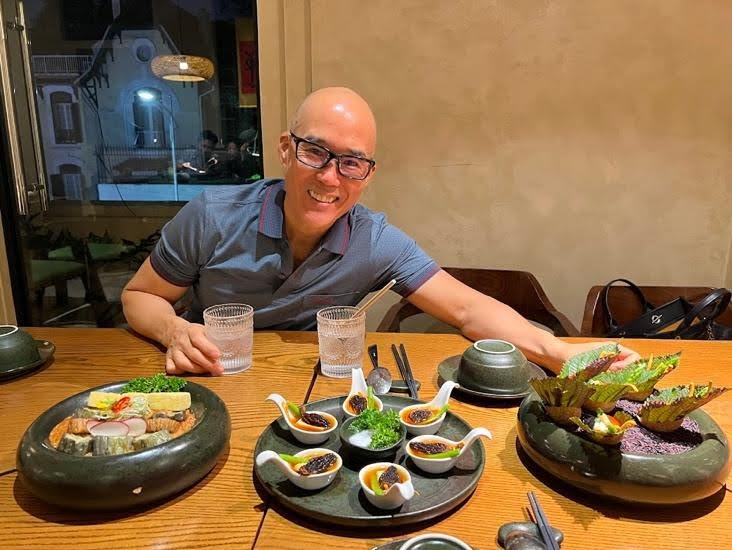
“Evidence-based decisions compound — in investing, leadership, and long-term health.”
This doesn’t mean plants are magic.
It means they stack the odds in your favor.
Why I’m Skeptical of Anyone Who Speaks in Absolutes
I am deeply skeptical of anyone who says:
“My nutrition advice is right — and everyone else is wrong.”
That doesn’t pass the smell test.
In investing, if someone pitched me a product with guaranteed returns, I would immediately disengage.
There is no such thing as guaranteed returns.
Only risk profiles.
Nutrition is no different.
Nutrition and Investing Are the Same Game
I think about nutrition the same way I think about investing.
Every decision involves:
- Risk
- Uncertainty
- Probability
- Time
The question is not:
“What works perfectly?”
The question is:
“What minimizes risk while maximizing long-term outcomes?”

“In health, as in investing, I don’t bet on absolutes. I manage risk.”
My “No-Risk Portfolio” Philosophy
In my investment life, I don’t take the same level of risk across my entire portfolio.
Some parts may include:
- Hedge funds
- Real estate development
- Private equity
- AI-focused investments
But there is always a portion of my portfolio designed to accept as close to zero risk as possible, often through:
- Government bonds
- Broad ETFs
- Capital preservation vehicles
That portion exists to protect the whole.
Why I Apply the Same Logic to Food
I apply the same logic to nutrition.
I may accept:
- Some risk in exercise
- Some risk in exploring relationships
- Some risk in trying new technology
But I do not accept risk in my food intake.
That’s why I chose an exclusively whole-food, plant-based diet.
Not because it’s extreme — but because it’s conservative.
What About Saturated Fat, Bacon, and Edge Cases?
Could saturated fat be fine for some people?
Possibly.
Could I be the one-in-a-million person optimized by eating bacon daily?
Theoretically.
Would it be rational for me to bet my long-term health on that outcome?
Absolutely not.
When the preponderance of evidence points in a different direction, betting on an edge case is speculation — not strategy.
Weight Maintenance as a Simple Benchmark
Another reason a whole-food, plant-based diet works for me is simplicity.
I believe maintaining an ideal body weight is one of the most reliable, observable health markers we have.
A diet built around whole plants:
- Is naturally lower in caloric density
- Is higher in fiber
- Supports satiety
- Makes weight maintenance easier
I don’t need to micromanage calories.
The system does the work.
Why This Way of Eating Feels Freeing
One unexpected benefit of eating only whole plants is mental simplicity.
I don’t focus on what I can’t eat.
I focus entirely on what I do eat.
That removes:
- Decision fatigue
- Negotiation
- Rationalization
It’s incredibly freeing.
Structure does that.
The Discipline Monster Perspective
This philosophy aligns perfectly with Discipline Monster.
We don’t chase:
- Extremes
- Hacks
- Certainty
We build:
- Structure
- Probability-based decisions
- Consistency over decades
In health, as in investing, boring often wins.
Final Thought
I don’t need nutrition advice to be exciting.
I need it to:
- Minimize risk
- Maximize long-term healthspan
- Hold up over decades
Listening to scientists, clinicians, and epidemiologists isn’t fashionable — but it’s rational.
And rational decisions, repeated consistently, compound.
Want to Make Health Decisions Without Chasing Hype?
If you want to stop reacting to headlines and start making health decisions the same way serious business decisions are made, start with clarity.
Download the Clarity Manifesto — a short foundational guide that helps you define why your health matters before you try to change behaviors.
When you’re ready to move beyond information and into sustainable execution, the Discipline Monster community provides the structure and weekly accountability that makes consistency realistic in a busy life.
Build Discipline Without Motivation
Two free tools to help you build real discipline through structure, clarity, and accountability — without relying on willpower.
Free downloads • No motivation required